Hail Storm Damage Roof Inspection Lexington KY
Forensic hail impact evaluations, thermal moisture diagnostics, and comprehensive insurance claim documentation across Fayette County.
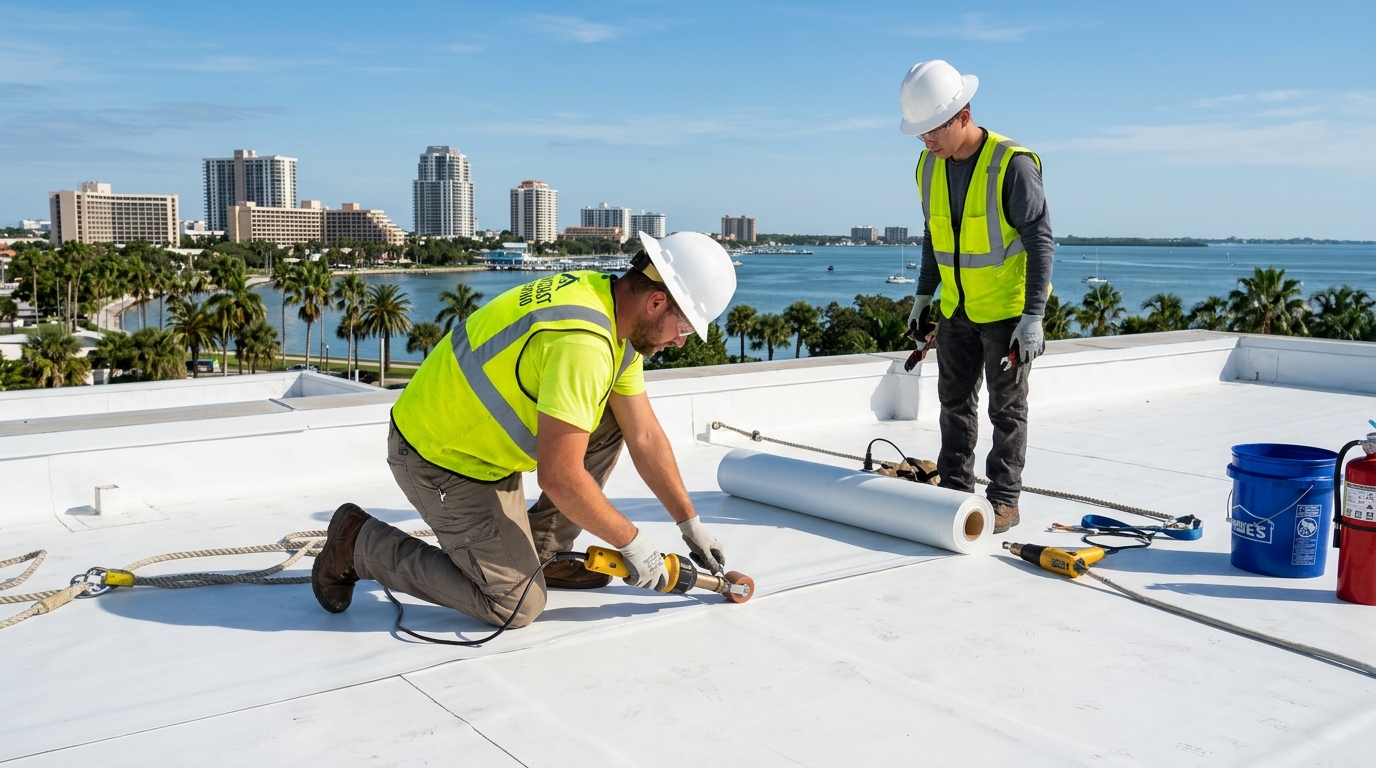
Severe spring and summer convective thunderstorms in the Bluegrass basin frequently generate high-energy hail stones exceeding 1.5 to 2 inches in diameter. Hail impact inflicts latent structural fractures within asphalt fiberglass mats, breaks tile interlocks, and dents metal standing seams across Lexington properties. Roof Expert USA dispatches certified roof inspectors equipped with digital non-destructive gauges and FLIR thermal imagers to evaluate hail impact severity and document insurance claims with total forensic precision.
The Hidden Nature of Lexington Hail Damage
Homeowners often inspect their roof from ground level following a severe hail storm and assume everything is intact because shingles are not visibly missing. This is a dangerous misconception. When large hail strikes an architectural asphalt shingle, the kinetic energy drives the mineral granules deep into the asphalt binder or dislodges them entirely, exposing the raw black bitumen matrix beneath.
Even more critically, the impact creates microscopic fractures in the underlying fiberglass reinforcement mat. Once exposed to Lexington's intense ultraviolet radiation and summer heat index, the unprotected asphalt rapidly oxidizes, dries out, and cracks within 6 to 18 months, causing widespread structural leaks long after the hail storm event has passed.
Comprehensive 4-Zone Hail Damage Diagnostic Matrix
1. Soft Metal Collateral Verification
Inspectors examine aluminum ridge vents, furnace caps, gutters, downspouts, and window wraps for denting and impact spatter, establishing indisputable collateral proof of hail stone size and directional trajectory.
2. 10x10 Test Square Mat Evaluation
Technicians chalk a standard 100-square-foot test quadrant on each roof slope (North, South, East, West) to tally discrete circular fractures, bruising, and granule loss per roofing square.
3. FLIR Infrared Moisture Tracing
Infrared thermal cameras scan attic decking to detect whether hidden impact fractures have already allowed moisture penetration into underlayments and insulation cavities.
4. Forensic Engineering Claim Dossier
Every inspection culminates in an organized, date-stamped digital photographic report that correlates local National Weather Service Doppler radar hail data with physical roof damage for your insurance carrier.
Navigating Insurance Adjuster Meetings in Fayette County
Insurance claim adjusters are trained to minimize payout liability by classifying hail impact bruising as "pre-existing wear and tear" or "manufacturing blistering." Having an experienced independent roofing professional on site during the adjuster inspection levels the playing field.
Contractors dispatched through Roof Expert USA climb the roof alongside the adjuster, point out subtle fiberglass fractures, present chalked test squares, and ensure that all collateral components—including drip edge flashings, ridge vents, and valley metals—are fully accounted for in the claim scope. Call (888) 208-4155 to schedule your professional hail damage evaluation today.
Frequently Asked Questions
How long do I have to file a hail damage claim in Kentucky? +
Most Kentucky homeowners insurance policies allow between 12 and 24 months from the date of the verified hail storm event to file a property claim. However, having your roof inspected immediately prevents further interior deterioration and establishes clear storm-date causality.
What is the difference between hail bruising and blister marks on shingles? +
Blisters occur when volatile gases escape through the asphalt during hot weather, leaving small pits with intact fiberglass. Hail impact crushes the fiberglass reinforcement mat underneath the asphalt, creating a spongy soft depression that leaks under hydraulic head pressure.
Does a hail-damaged roof always require full replacement? +
If the chalked 10x10 test square reveals more than 8 to 10 distinct hail impacts per slope, or if impacts compromise major valley and hip flashings, insurance carriers will generally approve a complete slope or full roof replacement to restore structural integrity.